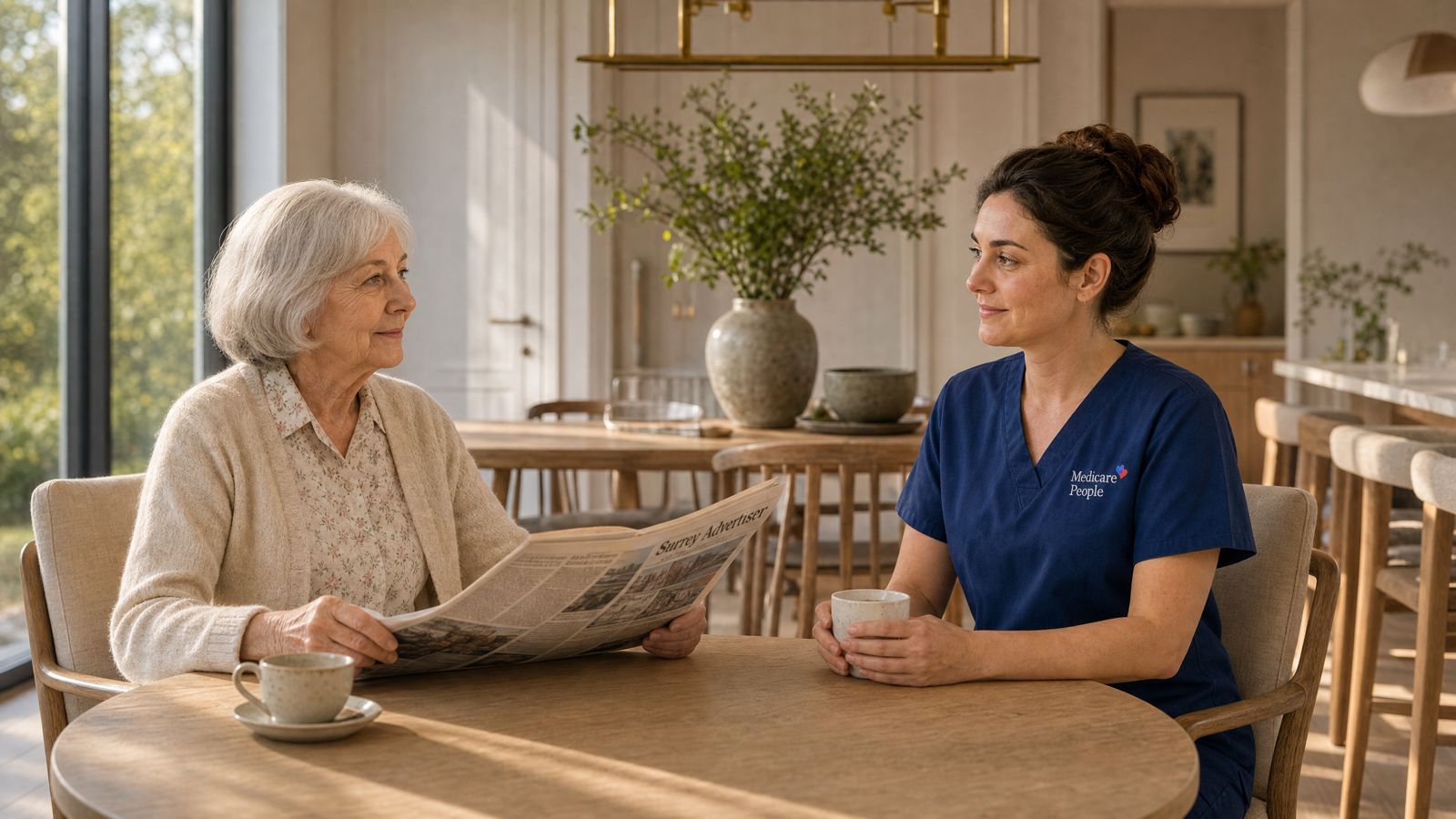

Live-in care for frailty and falls
Someone close by day and night to steady, support and spot problems early, so a fall does not have to mean a hospital stay.
Staying safe at home without giving up independence
For many older people, the biggest worry about living alone is having a fall with nobody there. Live-in care means someone is always close by.
Frailty often creeps up gradually: walking becomes slower, getting out of a chair takes longer, and confidence starts to fade. After a fall, many people stop going out, which can make muscles weaker and the next fall more likely.
A live-in carer breaks that cycle. They help with the tasks that carry the most risk, such as getting in and out of the bath, carrying things on the stairs or getting up in the night, while encouraging your loved one to stay as active as they safely can.
It is 24-hour home care in the truest sense: one person who lives in, knows the home and its risks, and is there if something goes wrong.
How a live-in carer helps someone who is frail
Safe movement
Steady support with walking, stairs, getting in and out of bed and chairs, and using walking aids.
Night-time help
Someone there if your loved one needs the bathroom at night, one of the most common times for falls.
A safer home
Spotting trip hazards, keeping walkways clear and making sure the home is well lit.
Eating well
Nourishing meals and regular drinks, which help with strength and reduce dizziness.
Staying active
Encouraging gentle exercise, short walks and getting out, to build strength and confidence.
Help after a fall
Following the agreed falls plan and calling for help if someone may be hurt, rather than lifting them.

What frailty and falls support at home looks like
- Morning
- Help getting up safely, washing and dressing, and breakfast.
- Daytime
- Gentle exercise, a walk or a trip out, lunch and time for hobbies.
- Evening
- A home-cooked meal and help getting ready for bed.
- Night
- The carer sleeps in, so help is close by for trips to the bathroom.
The carer needs a private bedroom and takes a two-hour break each day. We arrange cover for breaks and holidays.
What a live-in carer can and can't do
Our live-in carers are experienced, trained and checked, but they are carers, not nurses. They provide practical and personal support, and work alongside the GP, district nurses and other professionals who look after the clinical side.
A live-in carer can help with
- Help with walking, stairs and transfers
- Personal care and bathing
- Cooking and encouraging drinks
- Medication prompts
- Housework and keeping walkways clear
- Encouraging exercises from the physio
- Accompanying to appointments
- Company and reassurance
A live-in carer doesn't
- Clinical or nursing tasks such as injections or wound care
- Lifting someone from the floor after a fall without the right equipment
- Changing medication doses
- Working through the night as well as the day
Working with the falls team
Many areas have NHS falls prevention services and strength and balance classes, and the GP can arrange a falls assessment. An occupational therapist can also recommend equipment such as grab rails or a raised toilet seat. A live-in carer helps put that advice into practice every day.
If your loved one has a personal alarm, the carer will make sure it is worn. If needs become more complex, we will talk honestly with you about what support is right.
- NHS: falls: how to reduce the risk of falls
- Age UK: advice on staying steady, and local services for older people
How much does live-in frailty and falls support cost?
The exact cost depends on the support needed, including how often the carer is woken at night. We will give you a clear figure on the first call, with no obligation.
Help may be available from your local council, NHS Continuing Healthcare and Attendance Allowance. See the full cost breakdown → Ways to fund live-in care →
Live-in frailty and falls support across the South East
We arrange live-in frailty and falls support across Surrey, Kent, West Sussex and East Sussex. See the map of areas we cover →
Frailty and falls care at home: your questions
Can live-in care stop falls?
No one can promise to stop every fall, but live-in care can reduce the risk a lot. Having someone close by day and night, help with the riskiest tasks such as getting up at night or bathing, a safer home with clear walkways and good lighting, and encouragement to keep active all help. And if a fall does happen, help is there straight away, rather than someone lying on the floor for hours.
What happens if my loved one falls?
The carer follows the falls plan agreed with you and the professionals involved. If your loved one may be hurt, the carer will make them comfortable and call for medical help rather than lifting them, then let the family know. If they're unhurt, the carer helps them up safely using approved techniques or equipment. Every fall is recorded and shared with you, and the GP or falls team can review what might help.
Is this the same as 24-hour care?
Live-in care gives round-the-clock reassurance from a carer who lives in the home, which is why it's often called 24-hour home care. The carer sleeps at night and takes a daily break of around two hours, so it isn't the same as having someone awake all night. If your loved one needs help several times every night, we'll talk through options such as additional night support.
How much does live-in care for frailty cost?
Live-in care for frailty starts from £1,090 a week paid to the carer, plus our weekly agency fee of £250, and a one-off registration fee of £250. The household also provides the carer's food and a private room. The exact weekly rate depends on how much help is needed, especially at night, and we confirm it after a free assessment call, with no long contracts. Attendance Allowance is not means-tested and many frail older people qualify for it. Our cost page and cost calculator show how live-in care compares with a care home.
Do you offer short visits instead?
No. We only arrange live-in care, where the carer lives in the home. If you're looking for visits of an hour or two, your local council or the CQC website can point you to visiting home care providers nearby. Live-in care usually makes sense when someone is at risk of falls throughout the day, feels anxious alone, or when visits would no longer be enough to keep them safe.
Can the carer help my loved one stay active?
Yes. Staying active is one of the best ways to keep strength and balance. The carer encourages short walks, gentle chair exercises and any routine set by a physiotherapist, helps with getting out to the shops or a café, and keeps your loved one involved in everyday tasks like cooking and gardening where it's safe. They also make sure your loved one eats and drinks well, which matters for strength.
Are you regulated by the CQC?
Medicare People currently provides introductory live-in care services. We have submitted our application to the Care Quality Commission (CQC) and intend to introduce a fully managed live-in care service following registration. As an introductory agency, we find, check and introduce self-employed live-in carers, and the family agrees the day-to-day care with the carer directly. Before any introduction we carry out right-to-work, DBS and reference checks and interview every carer. Our team stays in touch after the carer starts, arranges relief cover for breaks and holidays, and finds a replacement carer if the match isn't working.
Talk to us about frailty and falls support at home
Free, no-obligation advice. Monday to Friday, 8am to 8pm.
Not sure yet? Take our 2-minute check →
Medicare People currently provides introductory live-in care services. We have submitted our application to the Care Quality Commission (CQC) and intend to introduce a fully managed live-in care service following registration.