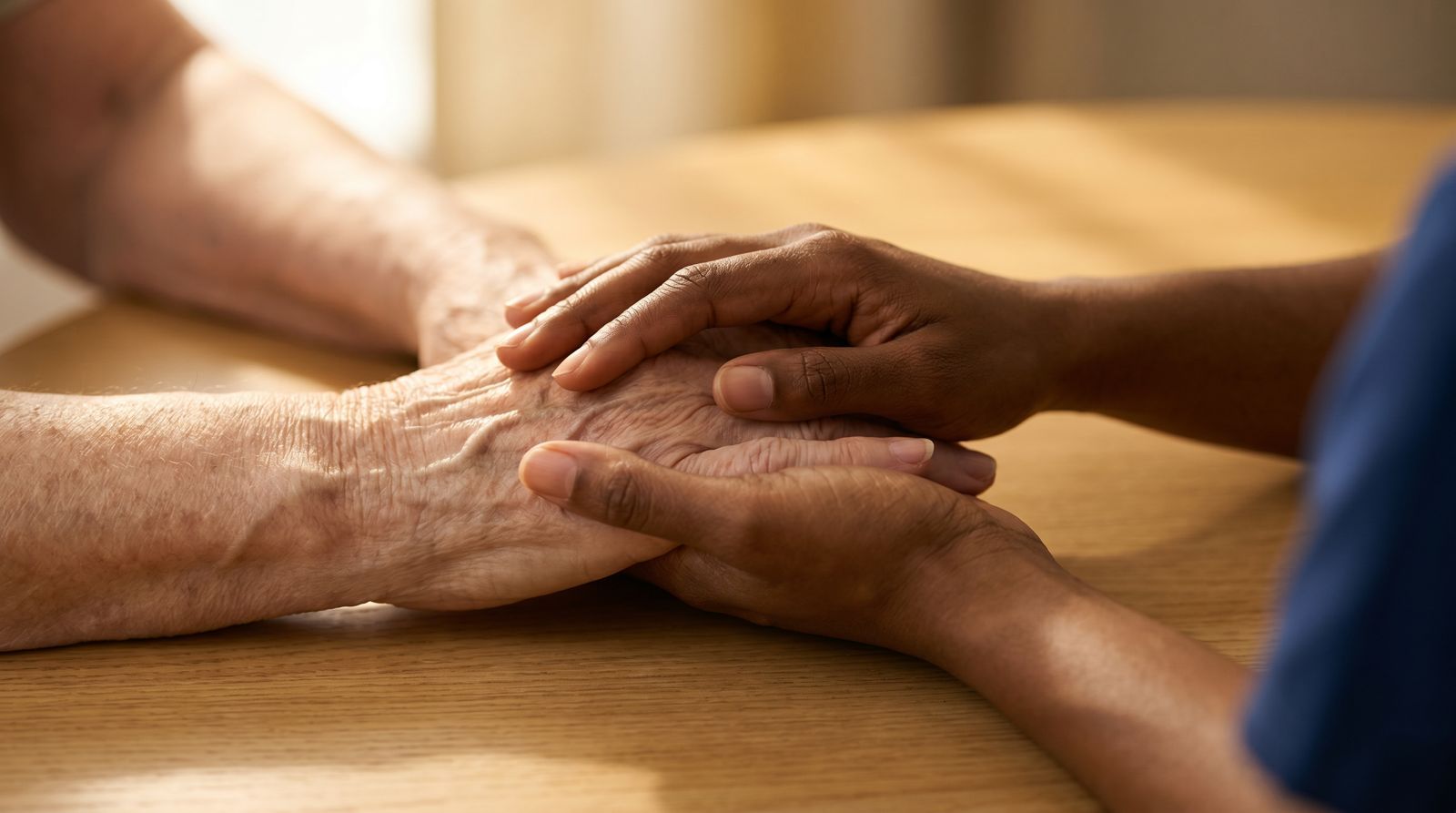

End of life care at home
Gentle, constant companionship and practical care, so the person you love can spend their final weeks or months at home, with family close by.
Being cared for at home, at the end of life
Many people say they would like to die at home, surrounded by the things and people they love. Live-in care can help make that possible.
At the end of life, families often want to be there as much as they can, but caring around the clock while coping with their own feelings can be overwhelming. A live-in carer takes on the practical care, day and night, so that family time can be family time.
Our carers provide personal care, comfort and company, and they work alongside the professionals who manage the medical side: the GP, district nurses and the local hospice or palliative care team. They notice changes and make sure the right people are told.
We understand that time can be short. If your loved one is in hospital or a hospice and wants to come home, call us as early as you can and we will do everything we can to have a carer in place quickly.
How a live-in carer helps at the end of life
Comfort and dignity
Gentle personal care, regular changes of position as advised by the nurses, mouth care and keeping someone clean and comfortable.
Being there
Someone in the house day and night, so your loved one is not alone and the family can rest.
Eating and drinking
Small, tempting meals and sips of drinks, following what your loved one wants and what the nurses advise.
Working with the nurses
Following the care plan from the district nurses and hospice team, and letting them know if symptoms change.
Support for the family
A calm presence for relatives, help with visitors, and practical support around the house.
Wishes respected
Music, prayers, favourite programmes, the window open, the dog on the bed: the small things that matter.
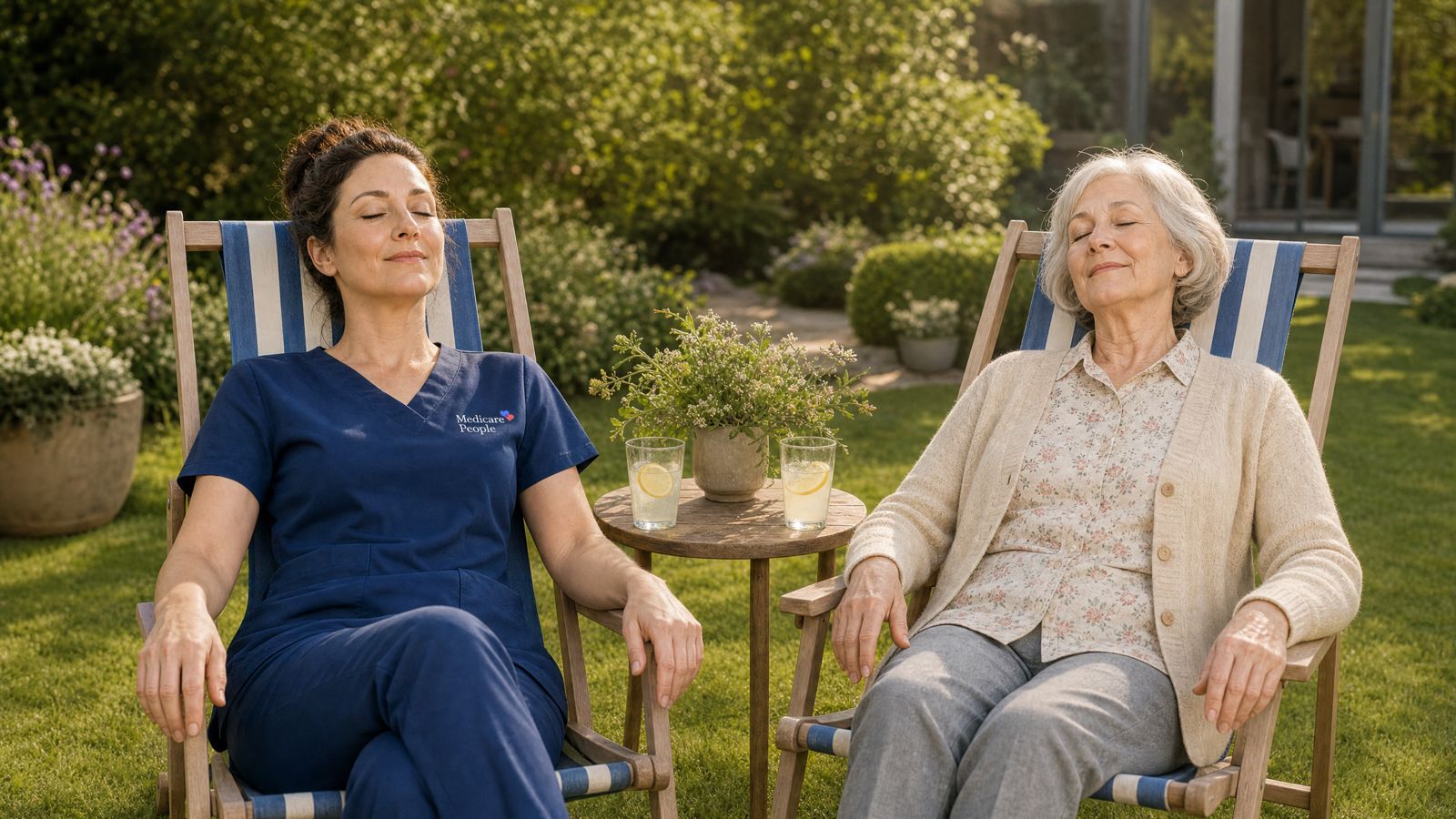
What end of life care at home looks like
- Morning
- Gentle personal care at your loved one’s pace, and a quiet start to the day.
- Daytime
- Company, comfort and time for visitors, with the carer keeping the home running in the background.
- Evening
- Settling for the night, with the family able to sit together while the carer helps.
- Night
- The carer is in the house overnight. As needs increase, we can talk about extra night support.
The carer needs a private bedroom and takes a two-hour break each day. We arrange cover for breaks and holidays.
What a live-in carer can and can't do
Our live-in carers are experienced, trained and checked, but they are carers, not nurses. They provide practical and personal support, and work alongside the GP, district nurses and other professionals who look after the clinical side.
A live-in carer can help with
- Personal care and comfort
- Repositioning as advised by nurses
- Mouth care and skin care
- Offering food and drinks
- Company day and night
- Housework, laundry and shopping
- Welcoming visitors
- Keeping nurses and family informed
A live-in carer doesn't
- Giving injections or managing syringe drivers
- Deciding on or adjusting medication
- Clinical nursing tasks (these stay with the district nurses and hospice team)
- Working all night as well as all day
Help with the cost of end of life care at home
If your loved one has a rapidly deteriorating condition and may be entering the end of life, a doctor or nurse can apply for NHS Continuing Healthcare through the Fast Track route. If agreed, the NHS may fund care at home. Ask the GP, ward or hospice team about it as early as possible.
Hospices often offer care, advice and support at home as well as on their wards, including support for the family. Your local hospice can tell you what is available in your area.
If your loved one has made an advance care plan or has a Lasting Power of Attorney, let us know so the carer understands their wishes.
How much does live-in end of life care cost?
The exact cost depends on the support needed, including how often the carer is woken at night. We will give you a clear figure on the first call, with no obligation.
Help may be available from your local council, NHS Continuing Healthcare and Attendance Allowance. See the full cost breakdown → Ways to fund live-in care →
Live-in end of life care across the South East
We arrange live-in end of life care across Surrey, Kent, West Sussex and East Sussex. See the map of areas we cover →
Guides and related care
End of life care at home: your questions
Can someone receive end of life care at home?
Yes. With a live-in carer for the practical care and companionship, and district nurses and the hospice team for the medical care, many people are able to stay at home until the end of their life. The carer helps with personal care, comfort, small meals and drinks, and keeping the house calm for visitors, and is there through the night. This gives families time to be together rather than carrying all the care themselves.
How quickly can a carer start?
We know time matters at the end of life. Call us as early as you can and we'll tell you honestly how quickly we can arrange a carer in your area, often within 48 hours. If your loved one is coming home from hospital or a hospice, we can talk to the discharge team to match their timetable. Where possible we'll introduce the carer by phone first, so the family knows who is coming.
Does the carer give medication?
Carers can prompt and help with routine medication in tablet or liquid form. Pain relief by injection, syringe driver or other clinical methods is managed by the district nurses or hospice team, not by the carer. The carer watches for signs of pain, discomfort or distress, records what they see, and contacts the nurses promptly so pain relief can be reviewed, day or night.
Can the NHS pay for end of life care at home?
It may. NHS Continuing Healthcare Fast Track can fund care for people whose condition is rapidly deteriorating and who may be entering the end of life. A doctor or nurse completes the Fast Track application, and decisions are usually made quickly. If it's approved, care is funded in full by the NHS. Ask the GP, hospice or district nurse about Fast Track as early as possible. Our NHS Continuing Healthcare guide explains how it works.
What happens when my loved one dies?
The carer will support you, contact the people you have asked them to, such as the district nurses, GP or family, and stay for as long as you need them in those first hours. They can help keep the home calm while the nurses or doctor confirm the death and the funeral director is contacted. Afterwards, we'll talk with you about ending the arrangement at a pace that feels right.
Can the carer support the family too?
Yes. End of life care is about the whole family. The carer takes on the practical tasks, so relatives can spend time together, sleep properly and step away when they need to. They can make drinks for visitors, keep a simple record of the day so everyone knows how things are, and be a calm presence through the night. Hospices also offer family support, and the carer can help you connect with it.
Are you regulated by the CQC?
Medicare People currently provides introductory live-in care services. We have submitted our application to the Care Quality Commission (CQC) and intend to introduce a fully managed live-in care service following registration. As an introductory agency, we find, check and introduce self-employed live-in carers, and the family agrees the day-to-day care with the carer directly. Before any introduction we carry out right-to-work, DBS and reference checks and interview every carer. Our team stays in touch after the carer starts, arranges relief cover for breaks and holidays, and finds a replacement carer if the match isn't working.
Talk to us about end of life care at home
Free, no-obligation advice. Monday to Friday, 8am to 8pm.
Not sure yet? Take our 2-minute check →
Medicare People currently provides introductory live-in care services. We have submitted our application to the Care Quality Commission (CQC) and intend to introduce a fully managed live-in care service following registration.